
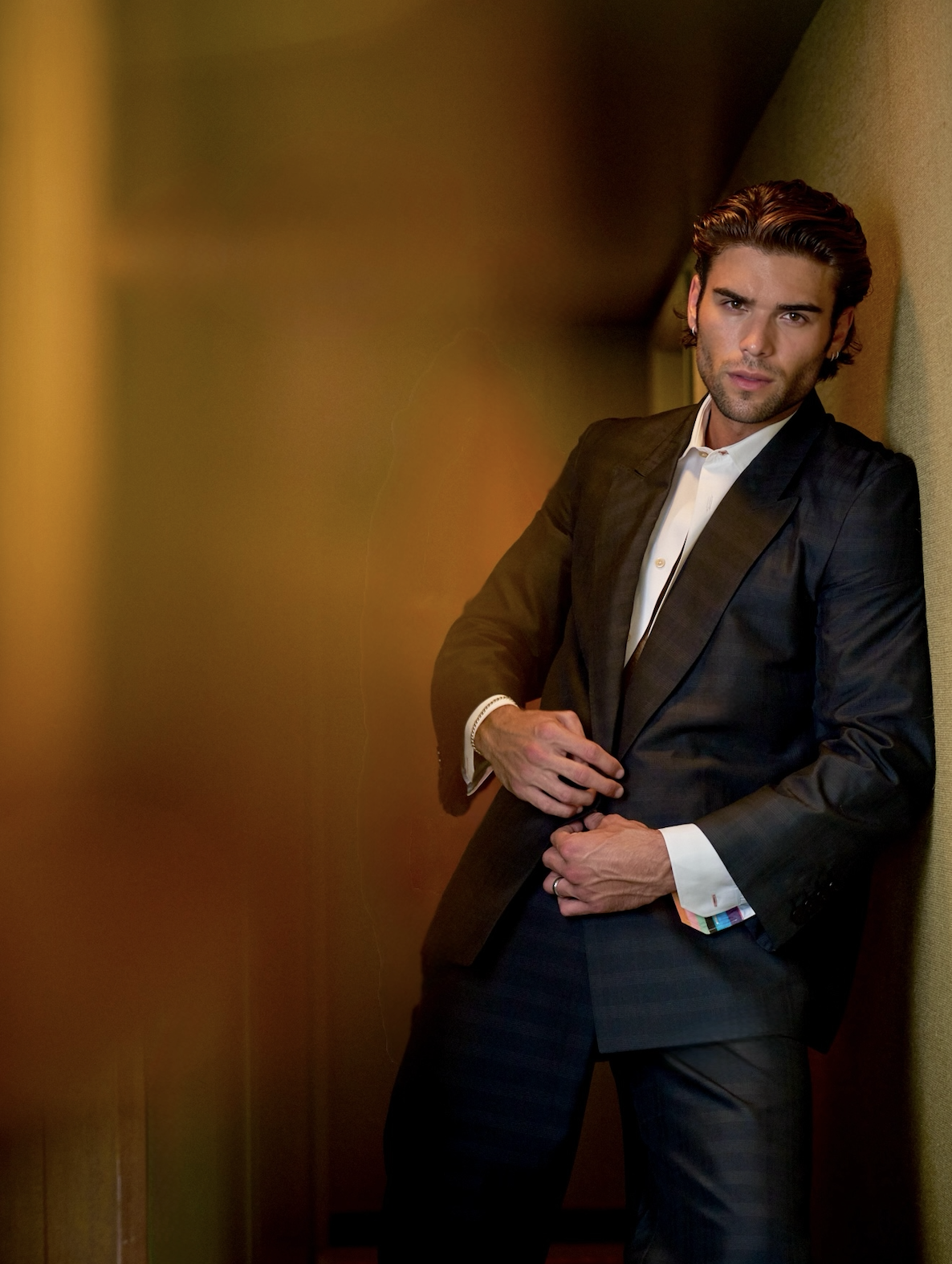
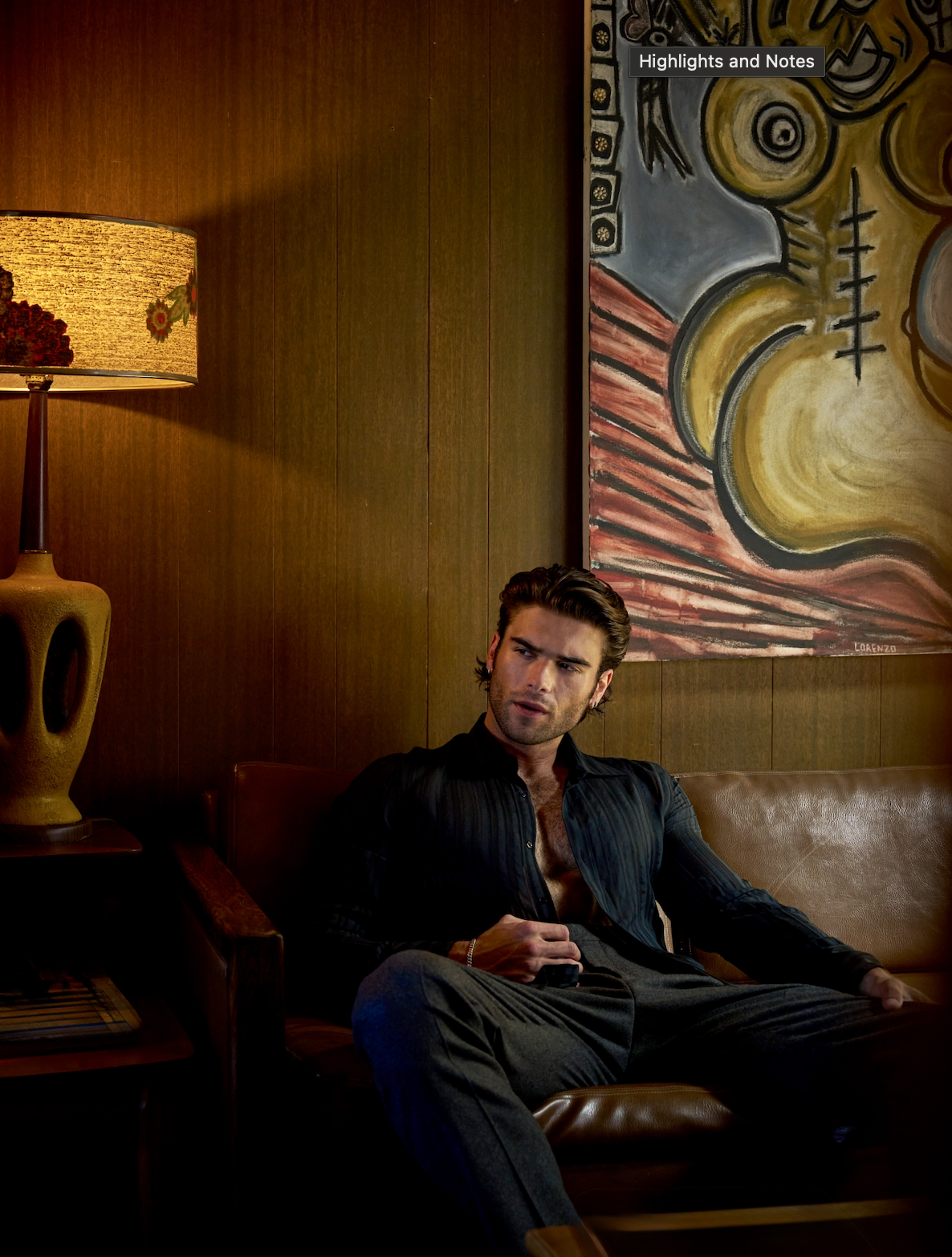
Photographed by: John Russo
Produced by: Photohouse Productions
Interview: Rexford Blake
Styled by: Linda Medvene
Grooming: Stephanie Lockwood for Exclusive Artists
Location: Malibu
Video: Ken Waller Media
Before the Spotlight
RB: Who was Hunter McVey before 9-1-1: Nashville? What were you chasing, and what shaped you?
HM: A mess… and I’m still a mess, but I’m proud of the mess, if that makes sense. I’ve always loved to create. I’ve always loved learning new things and always had an entrepreneurial spirit, whether I knew it or not. I had an incredible upbringing and thank my parents so much for how I was raised. It was an interesting combination: Dad being an entrepreneur, working multiple different ventures, startups, and moving around. On the other hand my mom was the definition of authenticity, artistic ability, and encouraged me to be myself throughout my youth. She painted murals for a living, and worked multiple side jobs when my Dad’s ventures were struggling. One of them being Lowes, and Waste Management. I wore a 38 waist in seventh grade, and hated the way I looked in the mirror at 12 years old. I was also a huge computer nerd. I built gaming PCs and made YouTube videos of myself gaming. I made videos of myself modifying nerf guns, selling them to neighborhood kids, and made my own versions of “Tech Decks,” the skateboards for your fingers. I used my Mom’s employee discount at Lowes to set up a workshop in their garage, and started making fingerboards to sell to the middle school kids.
When I got tired of feeling uncomfortable with the way I looked, I did the only thing I knew how to do: I went on the internet and looked up how to change my body. I started tracking calories on MyFitnessPal, packing my own lunches, skipping the double stromboli and the cheese sticks I loved. I lost 36 pounds the summer before eighth grade. On the first day of school a girl I’d had a crush on for two years, who had never once talked to me, looked at me in homeroom and said, “Oh my God, Hunter, you look great.” That was the first time I understood how differently the world treats you depending on how you look. It isn’t fair, but it’s true.
It was never a linear journey after that. I gained the weight back and lost it again. I spent years stuck in a zero-or-100 mindset that I still work on today, and I struggled with food in ways I’m only now starting to talk about. By the time I graduated college I was back at 260 pounds and going out four or five nights a week in Nashville. I was a salesperson for a company that helped people get out of their timeshares. I sold insurance in 28 states. I worked for a CBD startup and got laid off. In April of ’23 I had completely run out of money, and I had to ask my dad for rent for the first time in my life. That was one of the hardest things I ever experienced, as someone who never wanted any help.
A big turning point for me was a sales job I had no business getting: selling full-body CT and MRI scans for early detection of cancer and disease. Their youngest closer was 40. They asked how a 23-year-old was going to talk to people about cancer. I said, “Give me one month. If I don’t hit your close rate, fire me.” I was passionate about early detection because at that time, I was taking my mom to her chemo and radiation appointments, and saw how much if affected my family. I quit drinking for the first time since I was about 15 and set the goal to be sober for one month during training for this job I had no experience with, to give it my all. That one month of sobriety turned into 8 months. Changed my relationship with alcohol, substances, escapism, and my self confidence. After my month of training, My first month I sold about $225,000 in scans and came within $13,000 of their all-time record. That month taught me the thing that shaped everything after it: I can do things I don’t know how to do, as long as I’m willing to be uncomfortable. Everything started to snowball in the rifht direction after that. My relationship with Julia, my relationship with my self, my confidence, and my belief. That is what inspired me to start social media, which tranpired into a million different revenue streams, versions of myself, and allowed me to be ok with making mistakes. I found out mistakes just get you closer to your end destination, and here we are now, on TV, which I haven’t quite processed.
The Moment It All Began
RB: How did the opportunity come about? When did you realize this could be a defining chapter?
HM: It started with the worst audition tape in Hollywood history. I’d never acted. I had a modeling agent in Nashville and one in LA, and my LA agent sent me a tape request for the JFK Jr. series. It was a Sunday, I was in bed with Julia and pretty hungover, and something in me said, “Do this. Something cool could come out of it.” So Julia helped me film it downstairs. My agent wrote back that it was very bad: I was looking the wrong direction, using props, reading it all wrong. It was an hour before the deadline and I said, “Send it anyway.”
Nothing happened. Then about a month later my Nashville agent texted me: there’s a show filming here called Nashville 911, do you want to do a reading? I called Julia and told her I thought it was a spinoff of Reno 911. I had no idea there were already nine seasons of the original and a whole universe behind it. It turned out casting had seen that terrible JFK tape and found my Instagram. Their thinking was basically, “This guy clearly doesn’t know what he’s doing, but we want to know more.”
So I hop on Zoom, and I’m joking around the whole time with the Eric Soulierre, head of casting for Fox at that time. I get off the call and my agent says, “You know that was the head of casting at Fox, right?” I thought I’d blown it. Two days later they flew me to LA to audition at Fox studios. My pits were sweat-stained through my shirt. Before I walked in I said a prayer: You’re getting out of your comfort zone. Whether this happens or not, I’m proud of you for trying.
The next day I was boarding the plane home when they called: you got the role, we start filming in five days. I burst into tears right there on the plane. Part of it was that I couldn’t believe it. The other part was that I was terrified, because I had absolutely no idea how to act. That was the moment. I knew my life had just split into before and after.
Becoming the Character
RB: What drew you to the character? Did you know him immediately or did it develop?
HM: Blue gets introduced as the guy everybody judges on sight. He’s literally a stripper in a firefighter costume. Then a real emergency happens in the middle of Broadway, and he’s the one who runs toward it. The bride thinks he’s a real firefighter. He isn’t, but he showed up when it counted.
I connected with Blue instantly, because I’ve lived on both sides of being judged by how I look. I was the overweight kid people looked past. Now I’m “the shirtless guy on Instagram,” and people assume that’s all there is. Blue is a guy whose outside doesn’t tell you the whole story. I felt like there was something divine involved with these parrelels between my own life and Blue.
But I’d be lying if I said I knew how to play him on day one. I didn’t know the difference between a scene number and a page number. Understanding him came from doing the work: eight-hour sessions with my acting coach daily in the week prior to the start of filming, and then being thrown straight into the deep end on set. I think there is a lot to be said about forcing yourself to take action. You can plan as much as humanly possible, but until you’re taking action, experiencing the things you’re “planning for,” you will never know what works, what doesn’t, and how to adjust. I was so thankful for my lack of experience because all I could do, was be present.
Behind the Camera
RB: What’s life really like on set? A memory that captures the spirit of the cast and crew?
HM: My second day of filming tells you everything. Three scenes. The first one was at the Wild Horse Saloon, the same bar where I’d sung karaoke and ridden the bull in college, which was some weird déjà vu. I’d spent the whole week learning a choreographed routine to Lil Wayne’s “Fireman.” Then the director walks over and says they’re changing my entrance to a hundred feet back, so the choreography won’t work: “Just get up there and strip with instinct.” I thought Brad was joking. I was trying to not have a panic attack between every take…
Strip with instinct. In front of 300 extras, on a six-foot stage that’s a hundred feet long. I’m in the bathroom, which was my green room, looking in the mirror trying not to have a panic attack. I told myself: “If you go out there and die, at least you tried. But you are not dying in here.” We got the wide shots, and on maybe the third take I finally managed a smile. Then the director comes back and says, “Great, now we pick up the dialogue. No music. The crowd has to be silent.” Nobody tells you that. So for the next six hours I’m stripping in total silence in front of 300 people. I quickly learned how things are done in the world of film, TV, and continue to learn daily.
We wrapped that at 8pm, went next door, and shot the pedal-tavern crash on Broadway until 3am. I’m running through traffic, tourniqueting the bride’s leg, fake blood everywhere. Then we shot an alleyway scene with my boss at the bar until the sun came up at 5:30. I rode home with no tears and no thoughts left except, what did I just get myself into? Then we did that for eight months straight for season one. It’s been a blur, but one of the biggest blessings in my life. I feel like a kid everyday. I’m present in every scene, and get to work with some of the most wonderful souls I’ve ever met.
The thing people don’t see is the crew. On this show the fires, explosions and flipping cars are real, not CGI. We train in full SCBA gear with real firefighters directing us, so you’re not “acting” scared, your heart is actually pounding. Two hundred people show up before me and leave after me to make that happen. Honestly, my job is the easiest one on that set, and the crew doesn’t get nearly enough credit. They are the ones that make it happen.
Finding Your People
RB: How have cast relationships shaped your performance? Has anyone challenged you to approach acting, or life, differently?
HM: I walked onto that set with zero credits, standing next to people who have been doing this at the highest level for decades. I felt guilty that a guy with no experience got this job over people who trained their entire lives for it. When they announced the cast list, I received so much hate online that evening that I had a series of panic attacks, leaving me on the floor of my bedroom wondering if I could actually do this job.
What surprised me is how generous everyone was. Nobody made me feel like the guy who got lucky off an Instagram account. They made me feel like part of the team from day one. They made me feel like they wanted me to succeed and that I think, was the reason I was able to do it.
When you don’t know what you’re doing, you watch everything: how the veterans prepare, how they reset between takes, how they stay present on the 14th hour. I learned more just standing next to this cast than I could have in years of classes. I try to soak up information like a sponge from our star studded cast. I learn things every single day and I’m so grateful they have been so kind and welcoming to me since day 1.
The bigger lesson was about life, not acting. Every person on that set treats the work with respect, whatever their role. It made me want to run my companies the same way.
To find out more about Hunter follow him @hunter_mcvey